For first-generation students, the path to a college degree is often uncharted territory, a bold leap into the unknown. At NAU, these Lumberjacks don’t just blaze trails—they turn around and light the path for others, creating a powerful cycle of impact.
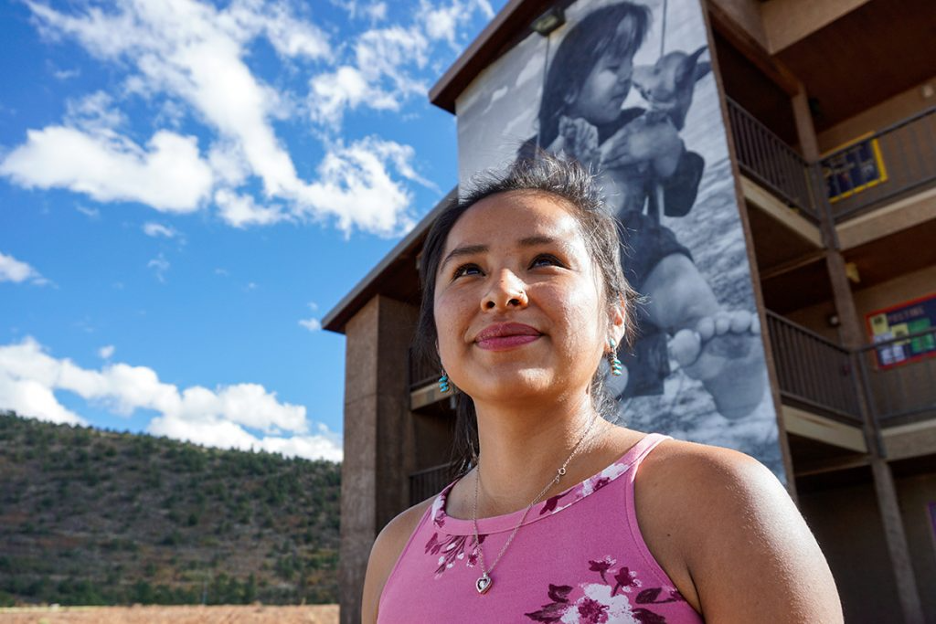
Breanndra Bahe, ’28
Raised on the Navajo reservation, a 45-minute commute to the nearest high school, Breanndra Bahe,
’28, thought the chances of attending a university were remote—literally and figuratively. But when she got an email waiving the application fee, she applied to her one and only choice: NAU. Her mom, supportive but realistic, gently reminded her of the financial hurdles and suggested a local community college instead.
When Bahe received her acceptance letter, she burst into tears. A full scholarship soon followed, paving the way for a journey that would take her far beyond anything she’d ever imagined, from the Olympics in Milan to the streets of Panama. But it was the sudden accessibility of opportunity at NAU that truly ignited her passion for helping others.
During her time at NAU, Bahe devoted countless hours to volunteerism, from preparing food for the Flagstaff Family Food Center in Louie’s Cupboard to making birthday cards for foster care youth through the Foster Alliance. A member of the Blue Key Honor Society, she volunteered at other nonprofits in the Flagstaff community, including Sharon’s Attic, a thrift store benefiting programs that support survivors of domestic violence.
The oldest of 13 grandchildren (cousins who, in Native American fashion, refer to each other as brothers and sisters), Bahe sets an example for others to follow—both personally and professionally.
Getting to the root of it all
Early on, Bahe’s parents instilled in her a desire to help others. Her mother, a certified nursing assistant, and her father, a traditional medicine man whose formal education ended at sixth grade, are both healers. Their example sets the stage for Bahe’s own path in biomedical science, with plans to become a dentist.
For Bahe, the mission is personal. She has seen the vast need for restorative dentistry on the reservation, including in her own family. She notes how complicated it was for her own father to get dental implants and how much his teeth bothered him, an issue she says is rampant on the reservation.
“Now, I’m that family member that when we go to dinners, I’m like, ‘Can I see your teeth?’” she says.
“I want to be able to be that person who can help people like my dad and the elders,” she adds.
“I want to go into implants, crowns, veneers—to be able to restore a tooth from the ground up.”
Her goal is to open a nonprofit dental practice on the reservation, specializing in restorative dentistry, and ultimately to fund college scholarships for other Native students. “My scholarship brought so much hope to me,” she says of the donor-funded program that provided her not just a new laptop, but a clear path.
“Being able to help people and make them smile and make them feel better— that’s what I want to do with my life,” she says.
Bahe—whose motto is “I can do it”—aspires to be the bridge between the world she came from and the future she’s building for everyone who is willing to follow.
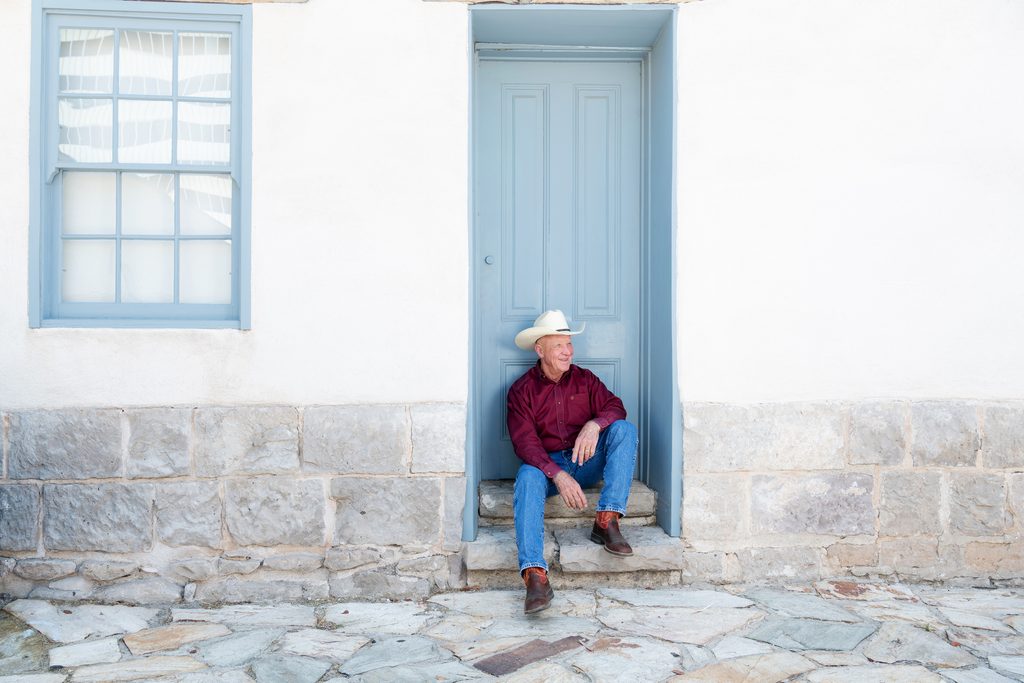
Hank Peck, ’75
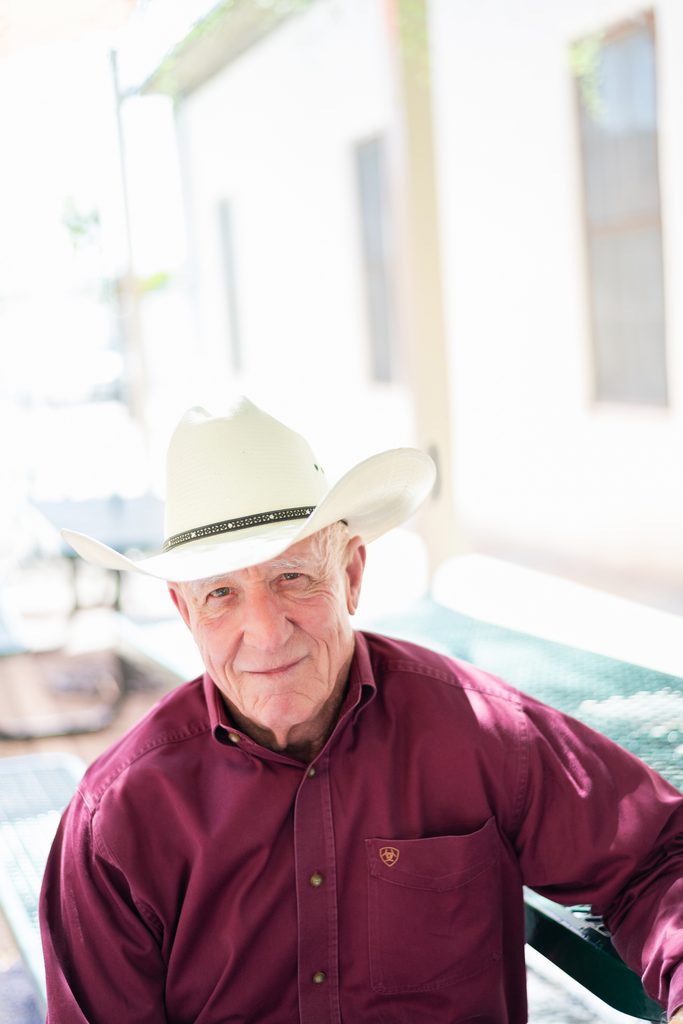
When a teenage Hank Peck, ’75, drove north from Tucson to visit a friend at NAU, he was stunned. He had no idea that Arizona boasted pine forests and the 12,000-foot San Francisco Peaks.
That trip was a revelation. As a first-generation student from a farming family that had lost everything in the Depression, the intimate campus and small student-to-professor ratio felt like the right fit.
Peck admits he had “absolutely no clue” what career to pursue, eventually landing on sociology with an emphasis on juvenile corrections. But after a semester working at a youth correctional facility, he realized he didn’t have the temperament for such work. That self-awareness eventually led him to a successful career as a Certified Financial Planner and partner in a wealth management firm—proving that your major doesn’t necessarily dictate your career path.
Paving the way for fellow first-gen students
For Peck, NAU was “formational” and had a lifelong impact. He wishes more people understood the combination of anxiety and courage first-generation students feel—unprepared for the number of choices to be made and without family experience to guide them.
“I’ve learned more from my mistakes and failures than from my successes,” Peck points out.
The experience fostered resilience as well as empathy for others’ struggles.
That profound impact created a “deep hook.” When former NAU President Eugene Hughes called Peck—then in his thirties—to serve on the Alumni Association Board, he was shocked. “I hadn’t accomplished squat,” he laughs. But he said yes, eventually also serving on the NAU Foundation Board, chairing the investment committee and leading NAU’s 2009–2016 capital campaign. Today, he remains an emeritus Foundation Board member and a non-voting member of the Foundation’s investment committee.
Peck and his wife have established scholarship endowments in the College of Education and in literacy. His daughter, inspired by trips to Flagstaff with him, chose NAU for its excellent teaching program, earning both her bachelor’s and master’s. For Peck, giving back is about ensuring that the same transformative experience he had remains available for every first-generation student who comes up the mountain, just as awed and hopeful as he was.
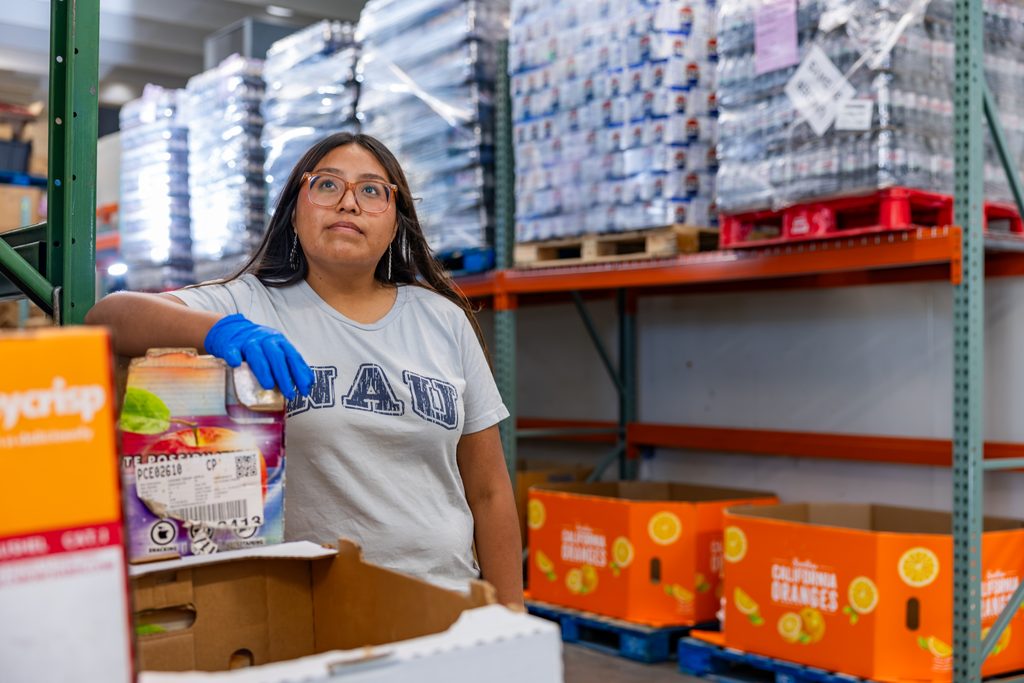
Carmen Xitlally Arciniega Avila, ’22, ’25
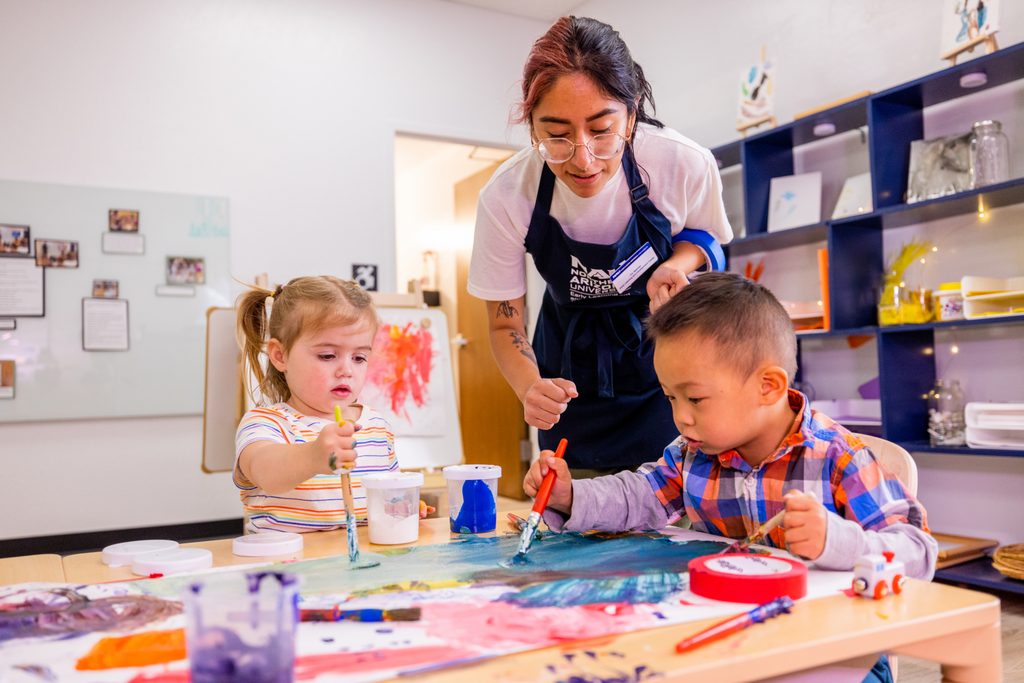
For Carmen Xitlally Arciniega Avila, ’22, ’25, the weight of being a first-generation college student was matched only by her resolve to carry opportunity forward. As the oldest of 12 children in a family that immigrated from Hidalgo, Mexico, she assumed the role of translator and family manager at a young age. When she chose NAU, it was a calculated risk—far enough from home in Mesa to build independence, but close enough to visit the family that is her “everything.”
Arriving in Flagstaff was a culture shock. “No one spoke Spanish or looked like me,” she remembers. At first, she felt a part of her identity begin to fade. It wasn’t until after she graduated that she began to reconnect with her culture, a reawakening that would define her career. “It helped me realize who I am as a person and who I wanted to be as a teacher,” she says.
Her own K–12 experience had been a struggle. As a Spanish-speaking English learner, she saw how easily a student could be misunderstood, mislabeled, or lost. That experience forged a powerful mission. She went on to earn not just her bachelor’s, but a master’s in English as a Second Language and bilingual education, and is now a mentor teacher at NAU’s Early Learning and Development Center, working with children as young as two, with plans to pursue a PhD.
Becoming the tía she needed
Arciniega Avila has shaped her classroom into a sanctuary of belonging. She speaks Spanish with her students, many of whom don’t know the language, teaching them new words and phrases around fun themes like “ice cream.” When a child from a Chinese or Arabic-speaking family joins, she learns a word from them, too. “It’s okay if we don’t know the language,” she teaches other practicum students. “We can all learn together.”
She has become the tía—the aunt—that she desperately yearned for in her own education: a source of unwavering support who reflects back a student’s full identity. “We may look different, but we all support each other and we’re all here as a family,” she says.
Arciniega Avila’s decision to become an ESL teacher was a direct pivot from a planned career in nursing. While she laughingly admits that biology wasn’t for her, the deeper draw was human connection. She now seeks opportunities to serve along the US-Mexico border, to give back to “her community.”
Her motivation, when things feel overwhelming, is simple and profound: her family.
“The reason I left home, is to give back to my family. Every sacrifice I make today is laying the foundation for my siblings to dream bigger, go further, and face fewer obstacles than I did.”
She wants others to understand that the fear first-gen students face is real, but that it doesn’t have to be a stop sign. “If we all work together and find our community, it really makes a difference,” she says.
Arciniega Avila is no longer the quiet college student who sometimes felt invisible. She is a dual citizen, holder of a master’s degree, a mentor, and a fierce advocate for every child regardless of their cultural background or ethnicity.
“I am not one or the other,” she states. “I’m both.” And she is determined to teach the next generation to claim every part of themselves.
Help the next Breanndra, Carmen, and Hank
Support first-gen students at NAU by making a donation to our First-Generation Initiatives Expansion fund.