A renovation underway at the Northern Arizona University Phoenix Bioscience Core (PBC) will soon expand the hands-on learning space used to train future healthcare professionals—an effort supported in part by a $1 million grant awarded by Virginia G. Piper Charitable Trust in 2025.
When construction is completed in June 2026, the expanded lab will allow students in NAU’s physical therapy, occupational therapy, and athletic training programs to practice clinical skills in a larger, technology-equipped environment designed for collaborative learning. The renovation will help accommodate growing enrollment across these programs while strengthening NAU’s ability to prepare graduates for careers in Arizona’s healthcare workforce.
Located in downtown Phoenix, the PBC is a 30-acre urban bioscience and medical education campus where NAU students learn alongside peers and researchers from other institutions in Arizona’s largest healthcare innovation district. The campus brings together universities, research institutes, and clinical partners focused on advancing healthcare education and discovery.
Within the NAU College of Health and Human Services (CHHS), the campus houses several graduate health programs, including the Doctor of Physical Therapy, Doctor of Occupational Therapy, Master of Athletic Training, and Master of Physician Assistant Studies.
For students in these professions, the environment where they train is as important as the coursework itself.
“Physical therapists help people of all ages improve movement and function to maximize their quality of life,” says Priscilla Weaver, chair of NAU’s Physical Therapy and Athletic Training programs. “Athletic trainers prevent and treat injuries and medical conditions, and occupational therapists enable people of all ages to participate in daily living.”
She adds, “Because these are hands-on graduate programs, the learning environment plays a critical role in developing students’ clinical skills and readiness for practice.”
Expanding space for hands-on learning
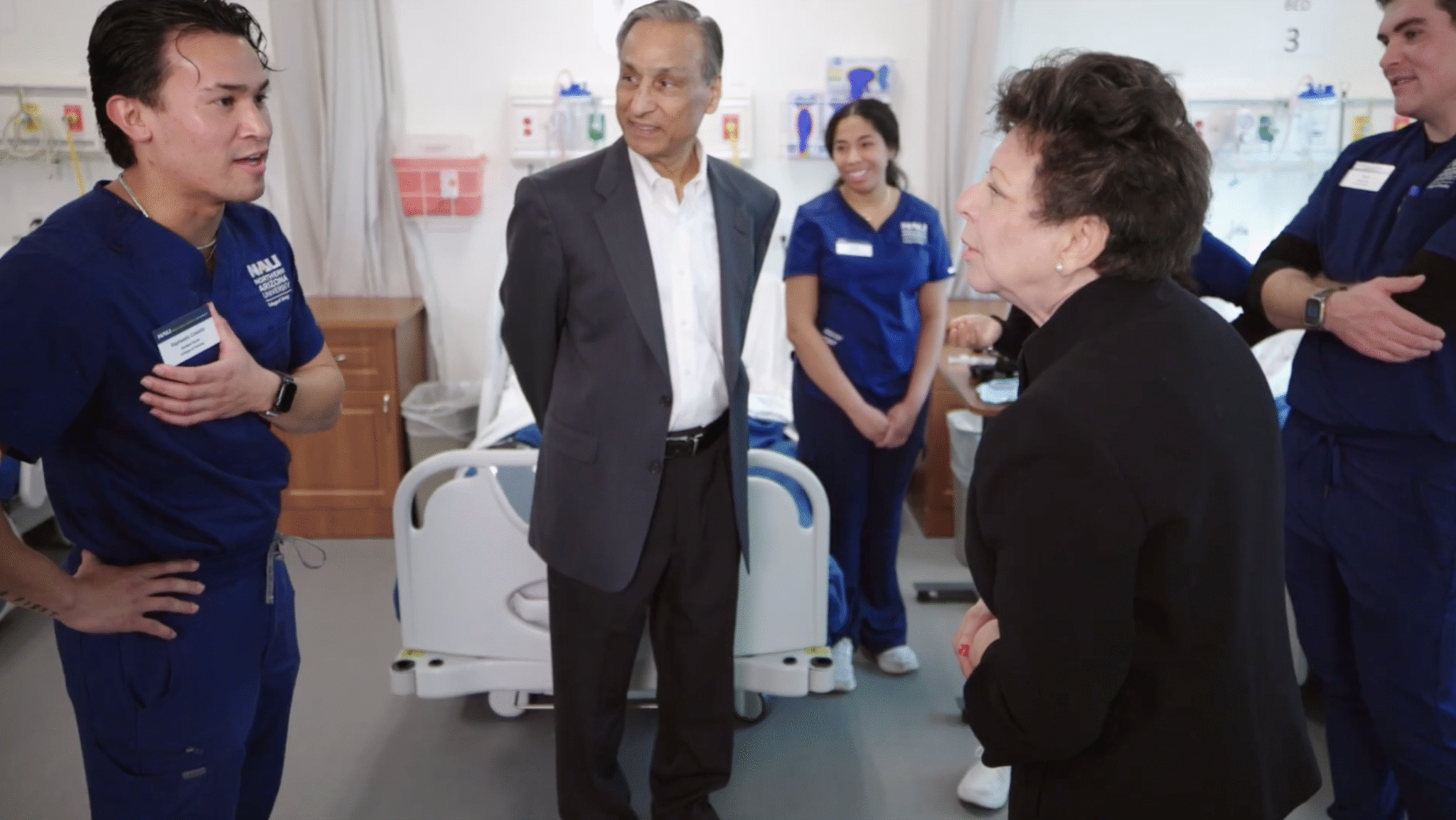
Before the renovation, the Phoenix campus had two separate lab areas: one primarily used for physical therapy and another, smaller space used for athletic training.
As NAU expanded its physical therapy programs—including launching a hybrid Doctor of Physical Therapy program in 2024—those spaces became increasingly constrained.
The hybrid program allows students to complete much of their coursework online while traveling to campus at strategic points during the semester for intensive hands-on lab experiences.
At the same time, enrollment across NAU’s health programs at the PBC has grown to more than 600 students each year. With multiple cohorts rotating through lab training throughout the year, demand for space has steadily increased.
physical therapy students
occupational therapy students
physician assistant studies students
athletic training students
“With the growth of our programs, particularly physical therapy, that space simply didn’t allow us to bring all of our students together for the kinds of hands-on learning experiences they need,” Weaver says.
“Our programs run year-round, including the summer,” Weaver says. “This renovation allows us to bring more students into the space throughout the day and continue supporting the growth we’ve experienced.”
Technology designed for clinical training
The renovation merges multiple rooms on the second floor of PBC’s Health Sciences Education Building into a single, expanded teaching lab of approximately 3,500 square feet. The new space will accommodate up to 65 students at a time and be shared by NAU’s physical therapy and athletic training programs.
Designed for hands-on instruction, the lab will support at least 32 treatment tables, or plinths, including 15 new battery-powered exam tables to supplement existing equipment. A new audio-visual system—paired with multiple screens and camera technology—will allow faculty to demonstrate techniques clearly across the room, while approximately 400 square feet of dedicated storage will support the program’s growing equipment needs.
Together, these enhancements will enable faculty to teach larger groups of students simultaneously and throughout the year, significantly expanding the Phoenix campus’s capacity for hands-on clinical training.
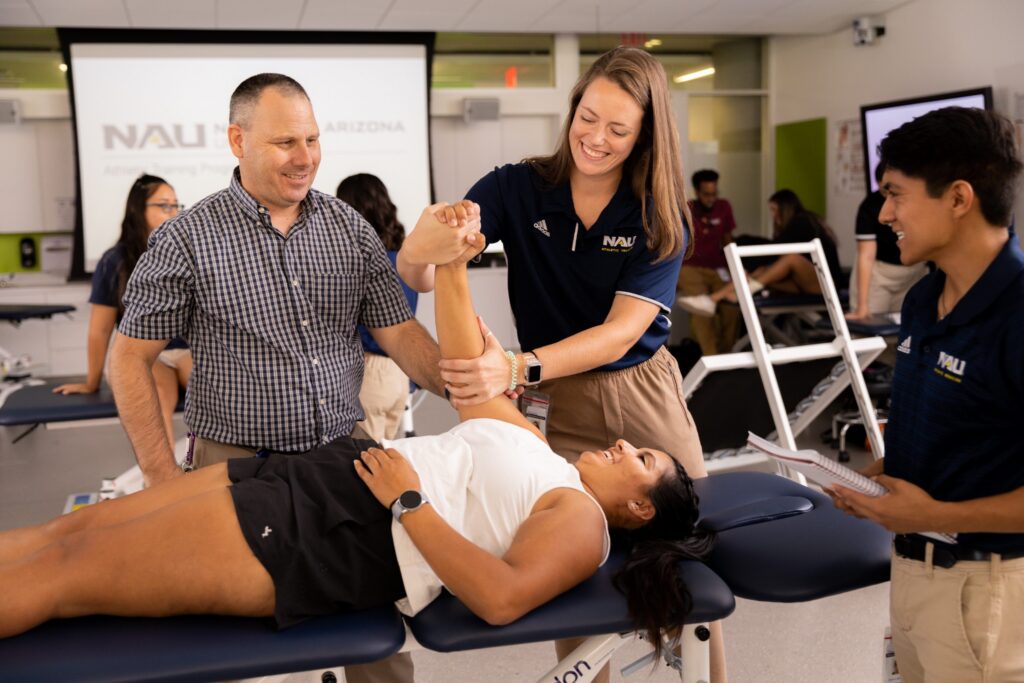
“With 60 students in a room, you can’t have everyone crowd around one treatment table,” Weaver says. “The technology allows faculty to demonstrate techniques while students can see the demonstration clearly from wherever they’re learning and practice at the same time.”
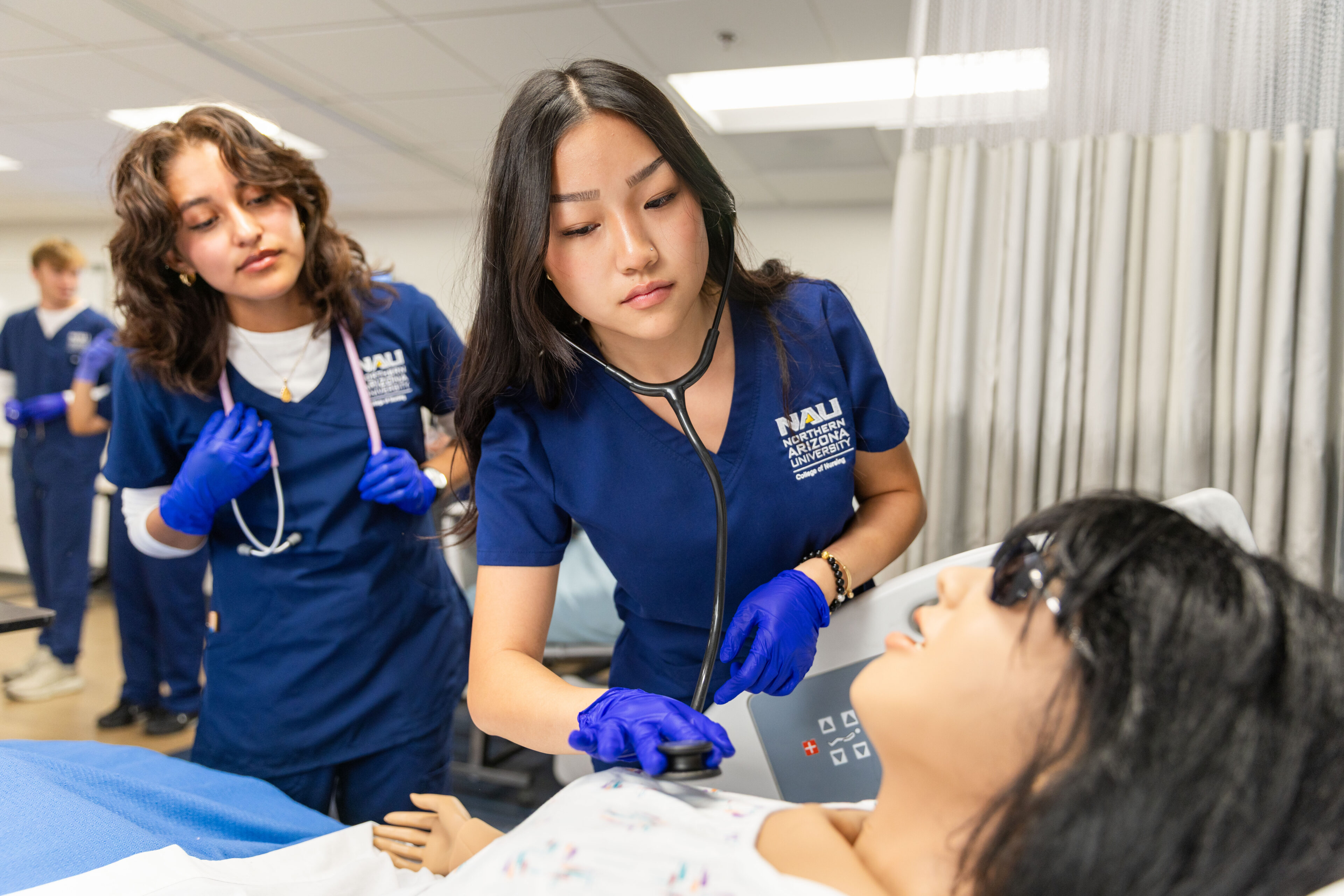
Students first learn techniques on classmates and patient mentors before applying those skills in clinical environments.
“They may read about how to move a joint or evaluate a patient,” Weaver says. “But to truly understand it, they have to touch, feel, adjust their hands, and receive feedback from faculty and peers. That hands-on progression is essential to preparing them for clinical practice.”
Addressing Arizona’s healthcare workforce needs
The renovation also supports NAU’s broader effort to expand the number of healthcare professionals trained in Arizona.
In recent years, NAU’s physical therapy program has redesigned its curriculum to emphasize competency-based education, allowing students to graduate in approximately 25 months and begin practicing sooner after licensure.
“NAU has been very proactive about increasing the number of students we can educate and preparing them to begin their careers as soon as possible,” Weaver says.
By expanding the lab space and improving training capacity, the Phoenix campus will be better positioned to educate more healthcare professionals who can serve communities across the state.
Learning in the heart of Phoenix’s healthcare ecosystem
Beyond the classroom, the PBC offers students access to an ecosystem of healthcare education and collaboration.
Students regularly participate in interprofessional learning experiences alongside peers studying occupational therapy, physician assistant studies, and other health disciplines. Faculty also partner with community organizations and clinics throughout Maricopa County to provide service opportunities and clinical training.
“The Phoenix Bioscience Core is a tremendous space for bringing different health professions together,” Weaver says. “Students learn not only within their own discipline, but also alongside other health professionals and in partnership with the community.”
Philanthropy accelerating progress
Support from Virginia G. Piper Charitable Trust helped make the renovation possible by funding the expansion of the lab space as well as equipment and technology used in training.
For CHHS, the investment represents a commitment to both student success and community health.
“Expanding NAU’s presence on the Phoenix Bioscience Campus reinforces our role as one of Arizona’s most impactful producers of allied health professionals,” says NAU CHHS Dean Janelle Chiasera. “With our programs embedded in the heart of Arizona’s largest healthcare ecosystem, we are expanding access to high-quality training and strengthening the pipeline of professionals prepared to meet the state’s most urgent workforce needs.”
Chiasera says philanthropic support like the Piper Trust grant helps accelerate those efforts.
“Modernizing our clinical training spaces and expanding opportunities for students is an investment in Arizona’s health workforce and the communities our graduates will serve.”
Preparing the next generation of healthcare professionals
For Weaver, the renovated space represents an important step forward for NAU’s health professions programs and the students who will soon train there.
“With this additional learning space, we can continue working toward our mission of providing person-centered, value-based care to improve the health and quality of life for the communities we serve,” she says.
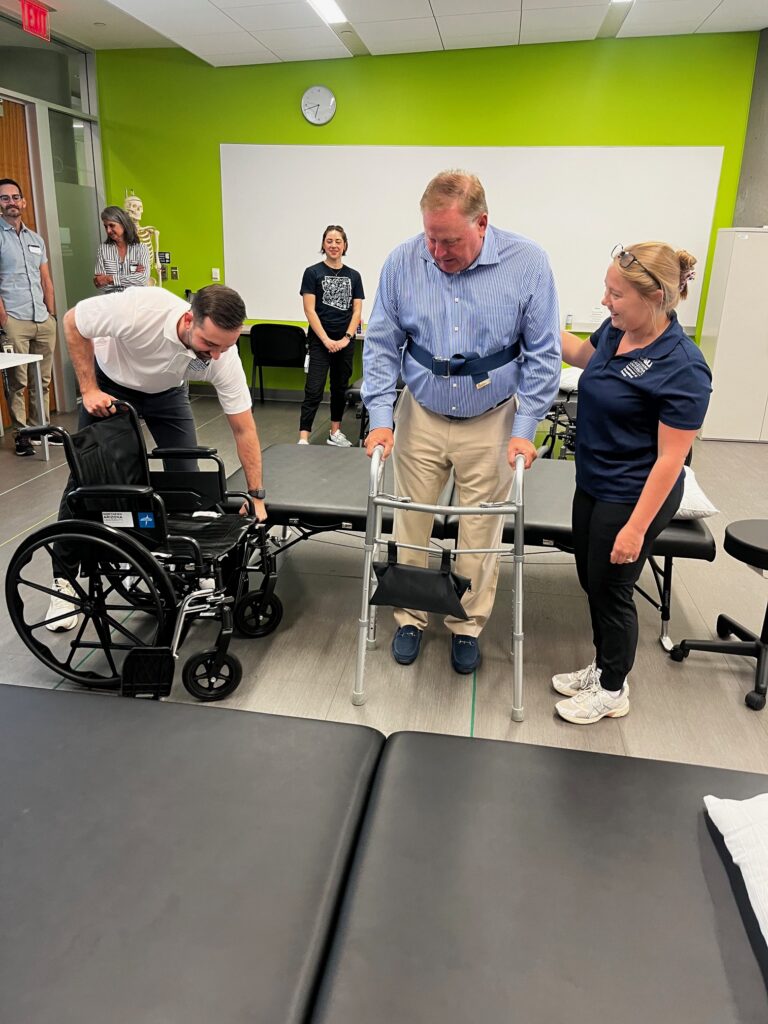
When the doors open this summer, the lab will quickly fill with students practicing the techniques and sharpening the clinical reasoning they will one day use with patients across Arizona and beyond.
“We’re incredibly grateful for the support that made this possible,” Weaver says. “It allows us to continue preparing healthcare professionals who are ready to serve their communities from the moment they graduate.”