Fluffing pillows and tucking bed sheets. Taking temperatures. Updating charts. Pouring tea. For a long time, this was the image of a nurse. Today, that picture is nowhere close to accurate.
Today’s nurses assess, diagnose, lead, advocate for, and provide comfort to patients in primary care offices, urgent cares, hospitals, community clinics, and more.
Nursing is a profession that requires clinical knowledge across various specialties, critical thinking skills, strong communication, and compassion. That’sthe cutting-edge career the Maria and Steve Sanghi College of Nursing is preparing graduates to enter.
Rising to meet the moment
Arizona is facing the nation’s largest nursing workforce shortage. A shortfall of nearly 30,000 registered nurses has left nearly 3 million Arizona residents without access to primary care. That shortage also has real impacts on nurses working in the field.
Eduardo Moreno Roman, ’21, 2025 President’s Alumni Award recipient, who works as a flight nurse at AeroCare Medical Transport and ICU nurse at Onvida Health, is concerned about nurse-to-patient ratios.
“The biggest challenge is balancing complex patient care with increasing system pressure while still giving patients and families the compassionate and competent care they deserve,” he says.
Carmi Stein, ’00, who works in occupational health at Abrazo Central, worries the shortage could have a long-term impact on the profession. “While nursing is a high-interest field, retention is challenging due to burnout and fatigue,” she says.
To help combat this crisis, NAU is working to educate and retain more nurses for Arizona. More than 80 percent of NAU nursing graduates stay in state to work at Arizona facilities, meaning the university can have a significant impact on the state’s shortage.
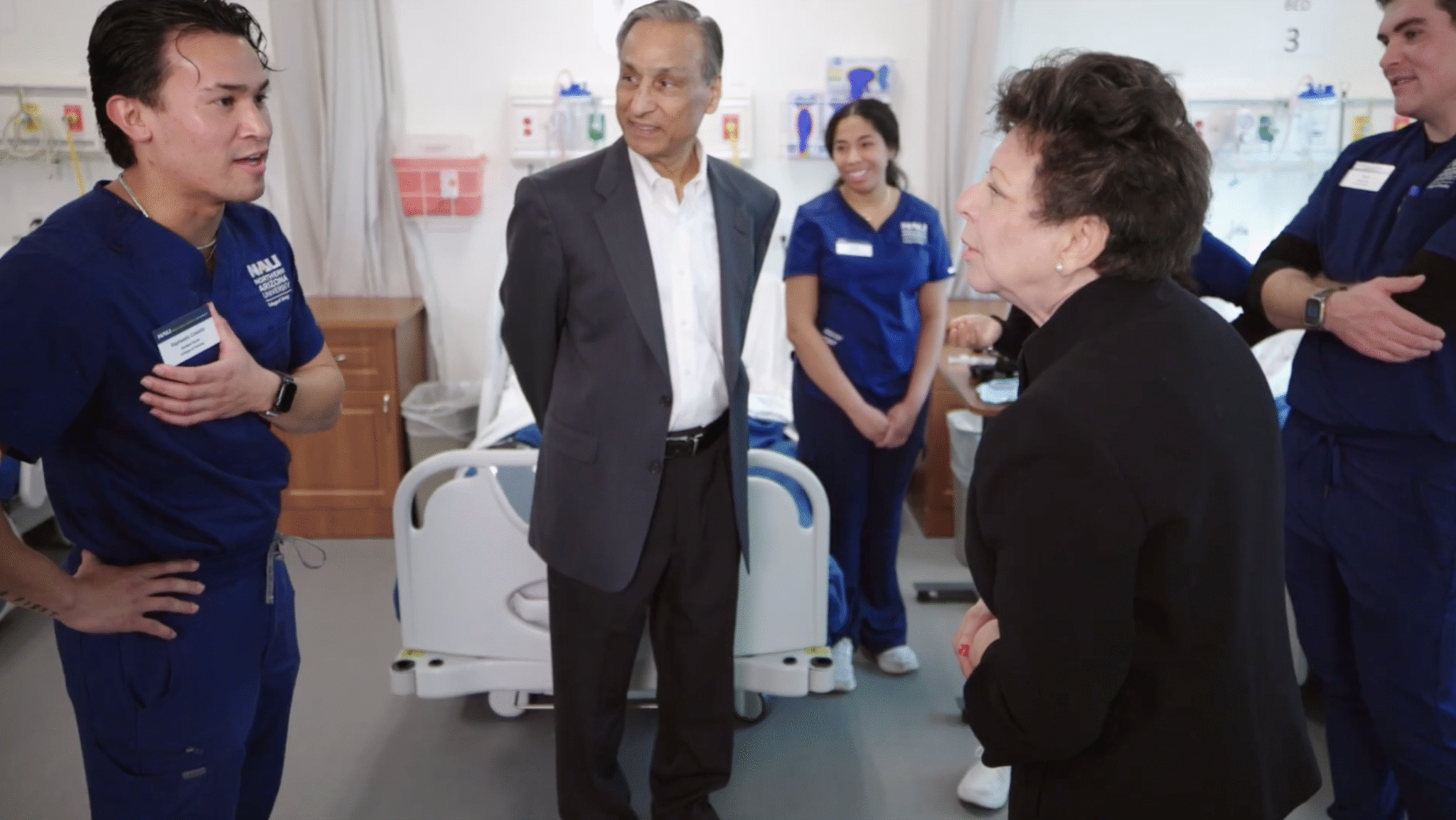
To keep pace with its students’ needs, NAU’s nursing program expanded its offerings and, in 2024, reached a major milestone by becoming a free-standing college—now named the Maria and Steve Sanghi College of Nursing. In February, Janina Johnson was named the inaugural Maria and Steve Sanghi Distinguished Dean thanks to support from Maria and Steve Sanghi. Johnson notes the funding will help strengthen student success initiatives and support continued innovation.
Elevate, the campaign for NAU, seeks to address the nursing shortage and provide support for the college. Each year, up to 200 qualified applicants are turned away due to a lack of space, but NAU has plans to build a new 40,000-square-foot facility to expand enrollment and prepare more nurses.
What today’s nurses need to know
Assistant Clinical Professor Garrett Mitchell, ’20, has been a nurse for 27 years. He has seen many new skills and topics introduced into the nursing curriculum.
The most significant shifts in recent years include changes to the nursing licensure exam and understanding social drivers of health.
“It’s no longer just about identifying symptoms and memorizing medication dosages,” explains Mitchell. The test now emphasizes clinical judgment and decision-making abilities. “For example, students review a patient’s chart to understand their case,” he says. “They are then asked to identify key cues and determine next steps.”
Today’s students also gain insights into the social determinants of health—non-medical factors related to where people live, learn, and work that can affect their health, such as access to housing, healthy food, education, safe spaces, and more. Nurses are also taught to understand the impact of health equity, which explores how things like poverty, discrimination, or limited resources might affect a patient’s health and well-being.
“Nursing can be complex,” Mitchell explains. “You’re taking care of an individual with a unique background and history. Clinical judgment takes into account all the factors about the patient to help you advocate and intervene.”
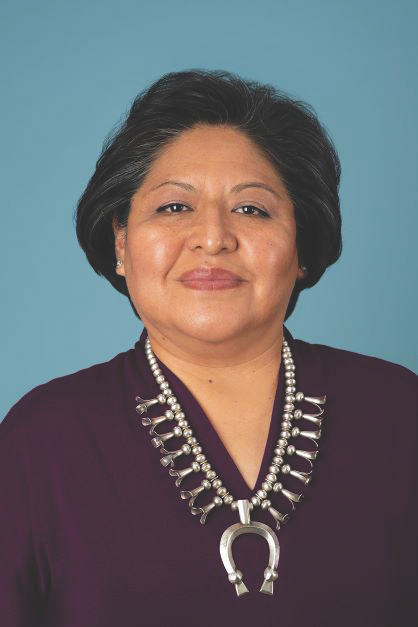
Joette Walters, ’97, who is Diné (Navajo) and works on a tribal reservation, sees the impact of healthcare disparities firsthand.
“Increasing the number of Native nurses and healthcare professionals who understand the language, beliefs, and values of the community could make a profound difference in improving the quality of care and building trust,” says Walters, who is the chief executive officer of Tuba City Regional Health Care Corporation.
“Nurses must be equipped with strong scientific knowledge and clinical skills to accurately assess patient needs, develop a plan of care, and administer appropriate interventions,” Walters says. “Nurses must also demonstrate strong critical thinking skills to solve problems and make sound clinical judgments.”
A Lumberjack’s nursing education
The clinical judgment model and its emphasis on critical thinking are now integrated in the College of Nursing’s courses. To accomplish this, faculty are changing the way they teach both undergraduate and graduate students.
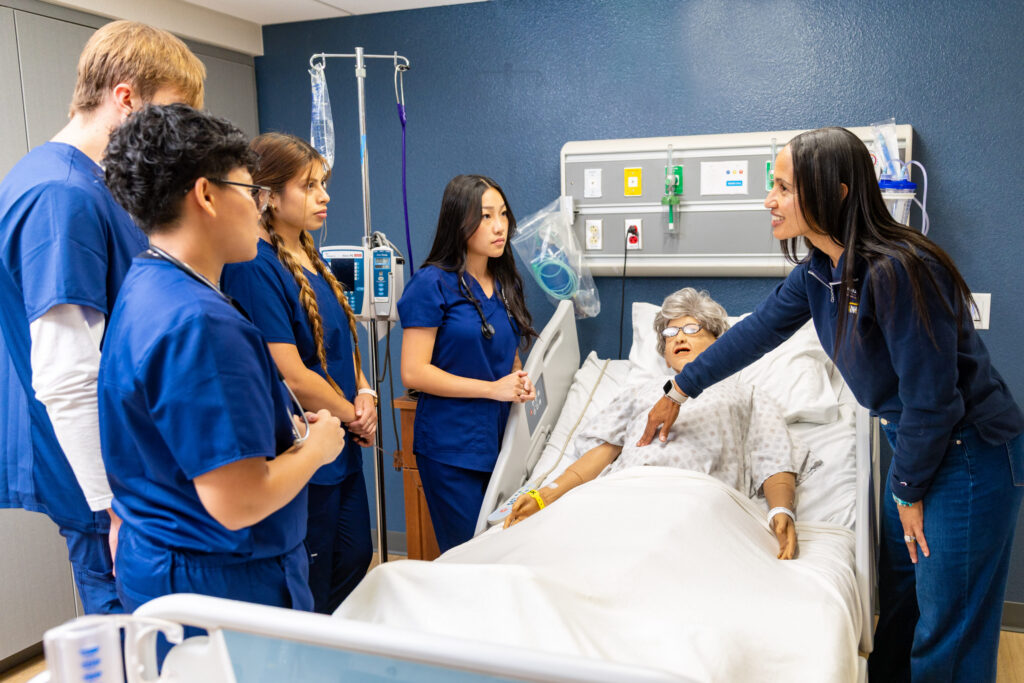
“Instead of learning in silos, integrated learning connects the dots between classroom lessons, hands-on practice, and high-tech simulations,” Johnson says. “This helps students move beyond memorizing facts to confidently taking action in real-life patient situations, preparing our nurses to be practice ready.”
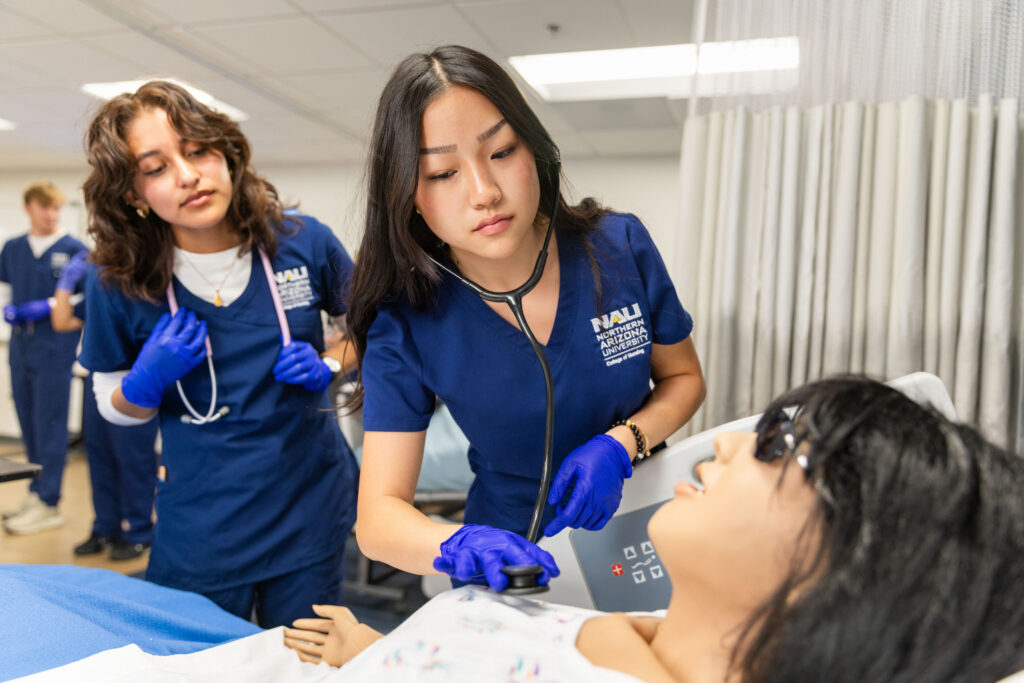
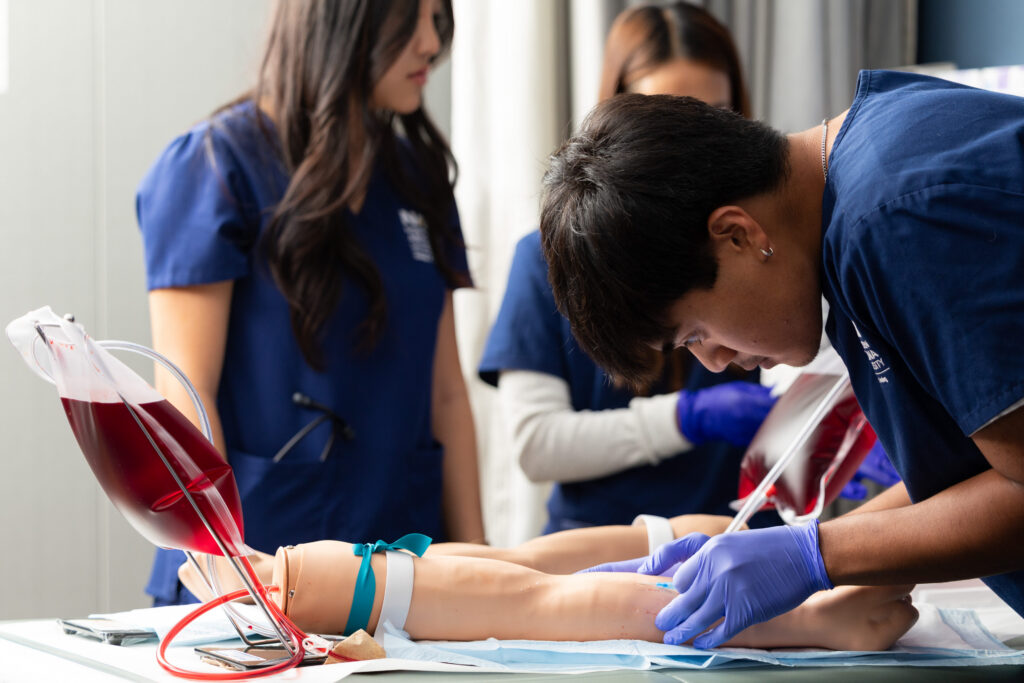
The college’s state-of-the-art simulation labs, which opened in 2023, play a key role in this approach by giving students hands-on experience in a controlled, safe environment where they can practice skills such as drawing blood, checking vitals, and assessing personalized needs with lifelike manikins. They also hone their communication skills and bedside manner with faculty and fellow students.
“The NAU simulation lab was instrumental in developing my critical nursing skills,” says Karlie McCabe, ’24, who now works at Flagstaff Medical Center in the Surgical Trauma ICU. “Utilizing the simulation lab allowed me to practice my critical thinking on realistic patient scenarios.”
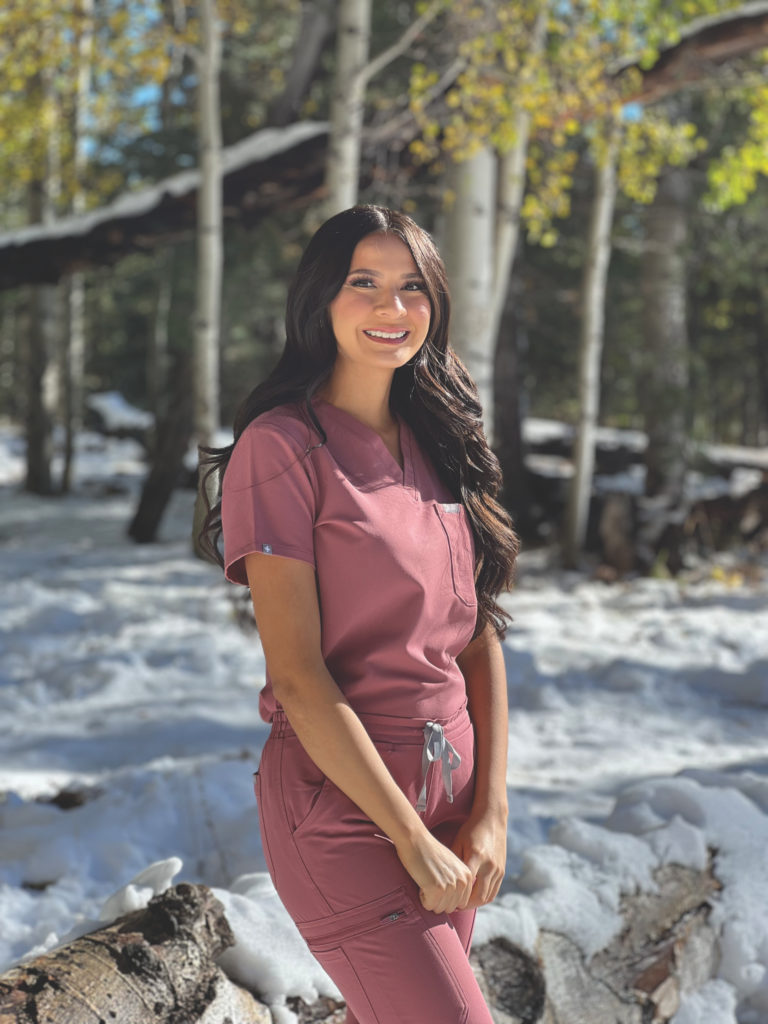
Recent graduate EJ Rapada, ’26, benefited from the simulation labs and coursework, but the application in clinical rotations has been key.
“I once cared for a patient who frequently asked for my presence simply for conversation and companionship. This experience helped me recognize that patients rely on nurses not only for medications and clinical care, but also for connection, compassion, and a sense of trust,” Rapada says.
Roman says his clinical rotations and mentorship helped him succeed, and patient interactions are what keep him going today.
“It’s a privilege to care for people during their sickest and most vulnerable times,” he says. “We see patients recover, and we get to be there for the families. Knowing that it has an impact keeps me grounded and motivated.”
Beyond individual patient care, nursing students explore community, population health, telehealth, electronic health record documentation, and leadership skills—learning how to improve health outcomes at a broader scale. Leadership projects have included building wheelchair ramps, hosting blood pressure clinics to identify early signs of disease, and bringing healthcare services to rural communities.
The many pathways to success
Because students have varying needs, the College of Nursing continues to offer new degree pathways for students across NAU’s network, including Flagstaff, North Valley, Tucson, and Yuma. The Accelerated BS in Nursing serves students who already hold a bachelor’s degree and have completed prerequisite coursework, while the RN to BSN pathway supports registered nurses who want to advance their education and earn a BSN.
The American Indian Program (AIP) pathway welcomes 10 Native American students each year and is helping prepare nurses to care for their own communities.
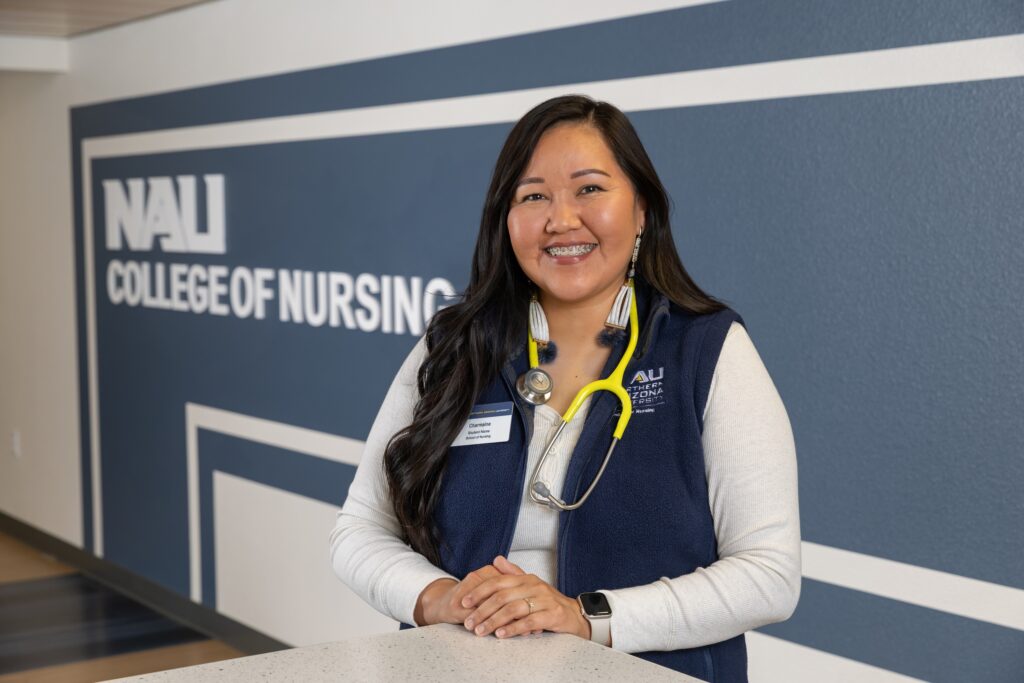
“It’s a great program,” says Charmaine Begay, ’26, a recent AIP graduate. “It’s great to be in a nursing program with other students who share your background as Native Americans. Only 0.4 percent of nurses identify as Native American. I’m really proud of my cohort.”
The College of Nursing places importance on small cohorts and strong faculty connections. There are future plans to create cohorts for student-athletes and veterans.
The new Global BSN Program, supported by AZ Blue Foundation funding, allows students the flexibility to take classes online and also participate in immersive learning experiences on campus. NAU also offers nurse practitioner programs to prepare registered nurses who are interested in becoming family nurse and psychiatric mental health nurse practitioners. The Doctor of Nursing Practice prepares Lumberjack nurses for leadership positions in healthcare administration, higher education, and health policy.
“Students are not just a number—we know them,” Johnson says. “Nursing is a high-touch profession with frequent and personal human interactions. We model this for students by creating learning communities that foster connection, promote belonging, and help reduce stress.”
This attention to the individual student, combined with critical thinking skills, state-of-the-art simulation labs, the study of social health determinants, clinical rotations, excellence in the learning environment, and a new, expanded facility on the horizon, sets the Maria and Steve Sanghi College of Nursing apart in opportunity and excellence.
“Our program is growing, but our intent is never to be the biggest in the state,” Johnson says. “We aspire to be the best.”
The future of healthcare in Arizona depends on the nurses we prepare today. By supporting the Maria and Steve Sanghi College of Nursing, you help educate more students and strengthen care for communities across the state.